
Why USA?
The appeal of studying in the United States extends beyond academic excellence; it encompasses a holistic educational experience that equips students for both professional success and personal growth. U.S. universities prioritize not only theoretical knowledge but also critical thinking, problem-solving, and collaboration skills, preparing students to thrive in a global workforce. The wide range of resources, from advanced research facilities to extensive libraries and cutting-edge technology labs, gives students access to tools that enhance learning and innovation.
Moreover, the cultural diversity in the U.S. offers a unique advantage. International students are exposed to various perspectives, allowing them to build strong intercultural communication skills and adaptability. This exposure is valuable for personal growth and professional development, as students gain a broader worldview and make connections with peers from around the globe. In addition, many U.S. institutions actively support international students with dedicated services like academic advising, career counseling, and cultural integration programs to help them adjust and succeed.
Opportunities for networking and real-world experience are also abundant in the U.S. Universities maintain strong ties with industries, and students often have access to internships, co-op programs, and research assistantships, providing them with practical experience and helping them build a professional network even before they graduate. This combination of high academic standards, practical training, and a supportive environment makes the U.S. a premier destination for students aspiring to excel academically, professionally, and personally.
Education System
The U.S. education system is known for its flexibility, diverse programs, and emphasis on holistic learning, structured across several key levels: elementary, secondary, and higher education. The system emphasizes a broad-based curriculum, encouraging students to explore a range of subjects before specializing, especially at the undergraduate level.
In primary and secondary education, students attend 12 grades, from kindergarten through high school (K-12). The focus is on a comprehensive education, including subjects like math, science, language arts, social studies, and physical education. High school students also have options to take Advanced Placement (AP) courses or participate in International Baccalaureate (IB) programs, both of which can earn them college credits.
Higher education in the U.S. is notable for its diverse institutions, including community colleges, liberal arts colleges, and research universities. The undergraduate level typically begins with a “general education” curriculum covering humanities, sciences, and social sciences, allowing students to develop a well-rounded knowledge base. After two years, students declare a "major" in a specific area of study, while they can also explore "minors" or take elective courses.
Graduate programs include master’s and doctoral degrees, focusing on specialized knowledge, research, and hands-on experience. The U.S. encourages practical applications of learning, and many programs incorporate internships, assistantships, and industry partnerships to enhance career readiness.
Academic freedom is a hallmark of the U.S. system, with students encouraged to participate in discussions, question assumptions, and explore interdisciplinary studies. The grading system typically follows a GPA (Grade Point Average) scale, and students are assessed through exams, assignments, projects, and participation. With its broad scope and commitment to fostering critical thinking and innovation, the U.S. education system is designed to empower students to become adaptable, knowledgeable, and globally minded individuals.

Opportunities for International Students
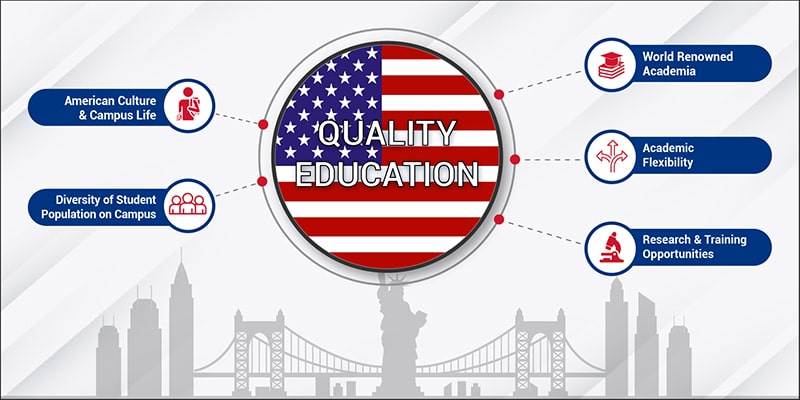
International students in the U.S. have access to a wealth of opportunities, making it a popular destination for those seeking both personal growth and professional advancement. One of the primary attractions is the availability of diverse academic programs and flexible curricula, allowing students to explore fields of interest and develop specialized skills. U.S. universities are known for encouraging interdisciplinary studies, meaning students can often combine majors, minors, and electives across different departments to create a truly customized educational experience.
In addition to academic flexibility, international students benefit from various career-building opportunities. Most universities have career services dedicated to helping students secure internships, co-ops, and part-time jobs, enabling them to gain real-world experience while studying. Many programs, particularly at the graduate level, focus on practical skills through industry partnerships, offering students valuable work experience in their chosen fields. Optional Practical Training (OPT) and Curricular Practical Training (CPT) programs allow international students to work in the U.S. during and after their studies, offering pathways to enhance their resumes and build networks in their industries.
Research is another major advantage for international students in the U.S. With ample funding and state-of-the-art facilities, U.S. universities are leaders in fields such as technology, engineering, medicine, and business. International students can often participate in research assistantships, working closely with professors and contributing to innovative projects. This experience is highly valuable, as it not only deepens knowledge but also prepares students for careers in academia or research-oriented roles.
Furthermore, universities and organizations often provide financial aid, scholarships, and grants specifically for international students, making education in the U.S. more accessible. Many schools also have international student offices that offer support services for adapting to life in a new country, providing assistance with visas, housing, and cultural adjustment. These resources, combined with opportunities for networking and professional development, make the U.S. an attractive option for international students seeking a holistic educational experience with promising career prospects.
Culture and Diversity
The United States is renowned for its cultural diversity, which plays a central role in shaping both its society and its educational environment. With a population that includes people from nearly every country, culture, and background, the U.S. is a melting pot where multiple traditions, languages, and perspectives coexist. This diversity is reflected on university campuses, where students from all over the world come together to live, learn, and collaborate. This environment fosters inclusivity, broadens perspectives, and encourages students to learn from each other's unique experiences.
In classrooms, this diversity is invaluable, as students are exposed to a range of viewpoints that enrich discussions and deepen understanding. International students bring their own cultural insights, which contribute to a richer learning environment and promote intercultural dialogue. Many universities also offer programs, clubs, and events celebrating various cultures, allowing students to share their traditions and learn about others. International festivals, cultural fairs, and global student organizations provide spaces where students can proudly showcase their heritage and build connections across cultures.
American society values individuality and expression, and this is mirrored in the U.S. education system, which emphasizes freedom of thought and encourages students to question, debate, and explore ideas openly. This emphasis on open dialogue fosters a space where diverse perspectives are respected, making it easier for students to navigate and adapt to different ways of thinking. Moreover, exposure to such a wide range of cultures enhances students' cultural competence, a vital skill in today’s globalized world, making them better prepared to work in international and multicultural settings.
Additionally, universities often offer resources specifically aimed at supporting international students and helping them adapt to life in the U.S. These resources include orientation programs, cultural exchange programs, and language support, ensuring students feel welcomed and supported as they adjust to a new environment. Living in the U.S. provides international students with the chance to develop friendships, build networks, and gain a greater appreciation for diversity, enriching their educational experience and personal growth.